
 Image 1 of 1
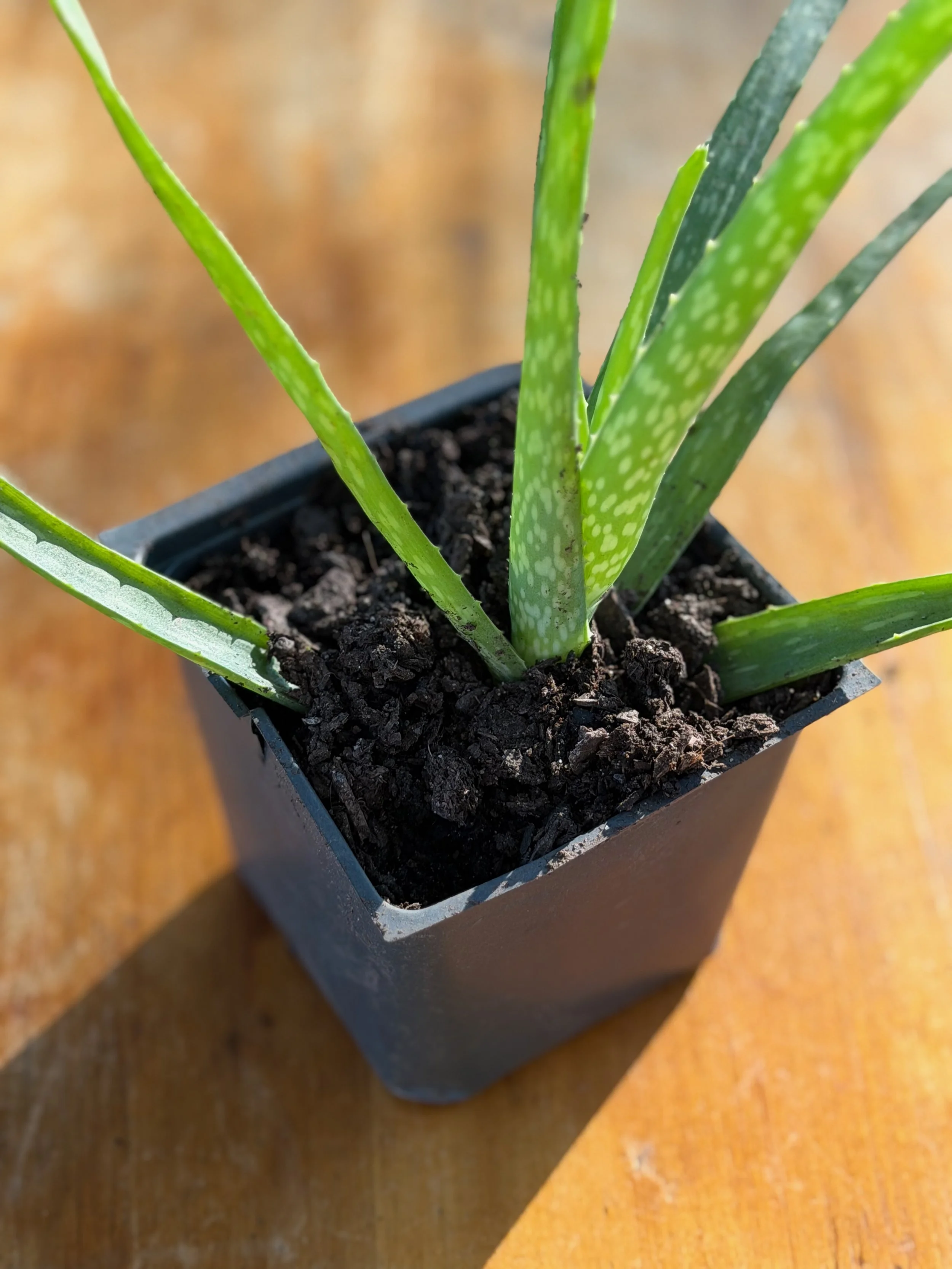
Aloe barbadensis miller
The plant kept on kitchen windowsills for thousands of years — for the gel inside the leaves, which people have reached for after minor burns, scrapes, and sunburn since the time of ancient Egypt. Dioscorides described it in the first-century De Materia Medica. It has been continuously cultivated in home gardens and kitchens ever since.
Easy to grow, nearly impossible to kill, and happy to live its whole life in a small pot by a sunny window.
What you’re getting:
A rooted and established plant, 4–6 inches tall, grown on the farm
Roots wrapped in moist sphagnum, sealed in a small plastic bag for safe travel
Pot into any 3–5 inch container with cactus/succulent mix once it arrives
Growing conditions:
Light: bright indirect to 4+ hours direct sun
Water: let soil dry fully between waterings — overwatering is the single most common way to kill an aloe
Hardiness: Zone 9–11 (perennial outdoors in these zones)
In colder zones (3–8): grow in a container as a houseplant year-round, or move outdoors during warm months and back inside before the first frost
Mature size: 1–2 feet tall and wide
Soil: cactus/succulent mix, or regular potting soil amended with perlite and sand
A note on placement:
Aloe is happiest in the sunniest spot you have — a south-facing kitchen window, a bright bathroom, or outdoors on a porch during warm months. It can tolerate lower light but will stretch and get leggy. Keep it near a window where it gets at least a few hours of direct sun each day.
A note on use:
The clear gel inside a mature leaf has a long tradition of topical use on minor burns, scrapes, and sunburn. Cut a leaf, split it open, and apply the gel directly. The outer skin of the leaf and its yellow latex are irritating — scrape only the clear interior gel.
Shipping:
Ships nationwide via USPS Priority Mail (1–3 days). Aloe handles shipping well in most conditions. During cold-weather months, we add a heat pack if temperatures at your destination are forecast below 40°F.