
 Image 1 of 1
Symphytum officinale · knitbone, bruisewort
A hardy perennial with velvet leaves and purple-pink bell flowers. The genus name comes from the Greek symphyein — “to grow together” — a reference to the plant’s long reputation in home apothecary traditions for topical use on bruises, sprains, and slow-healing skin. Modern research identifies the active compound as allantoin, which the FDA classifies as a skin protectant.
One of the most useful plants to have along a fence line, in a dedicated herb bed, or at the edge of the garden where its deep rhizomes can settle in and come back year after year.
What you’re getting:
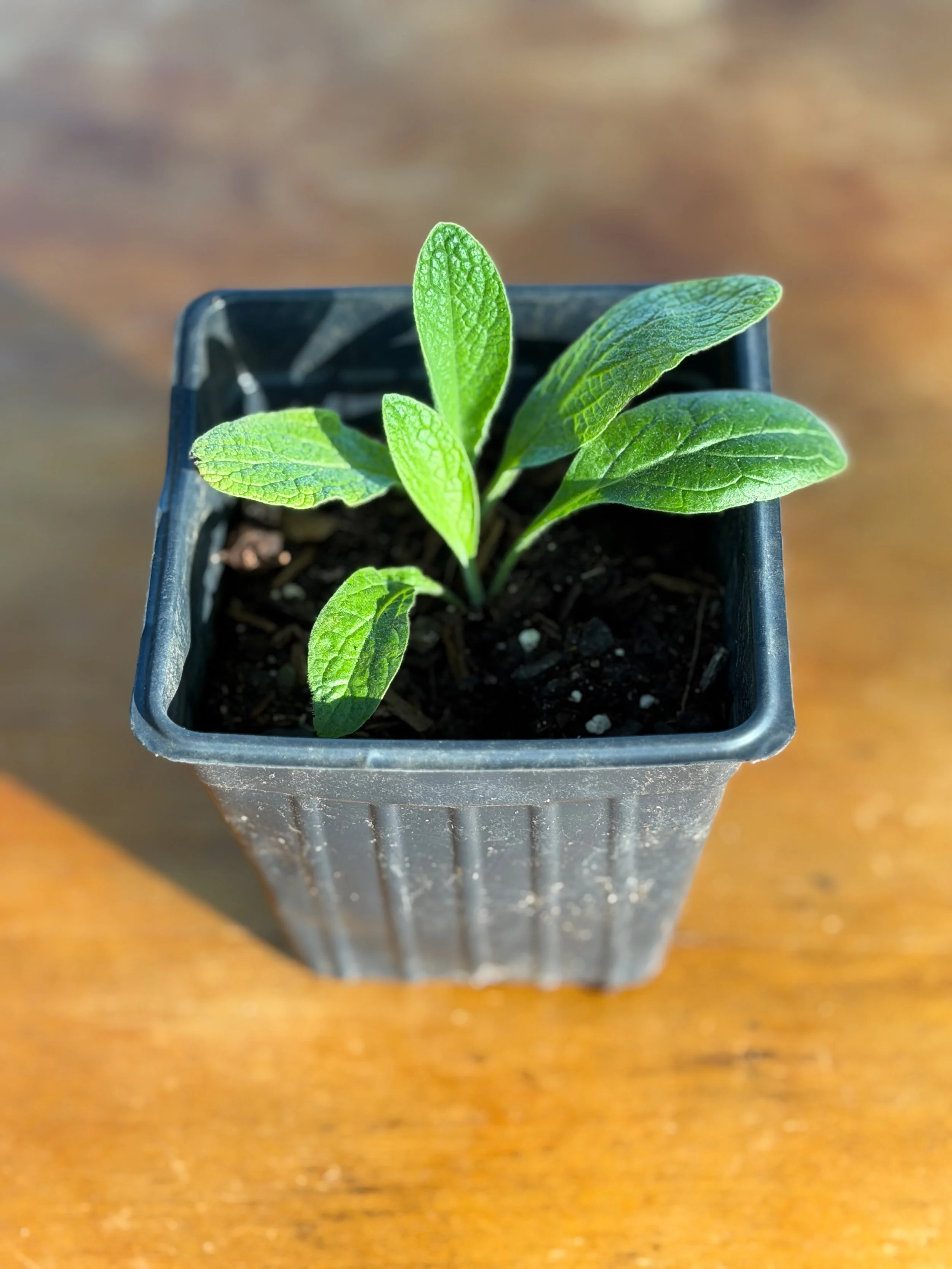
Rooted start, 3–5 inches tall
Roots wrapped in moist sphagnum, sealed in a small plastic bag for safe travel
Plant directly into garden soil or a 6+ inch container once it arrives
Growing conditions:
Light: full sun to partial shade (afternoon shade preferred in hot climates)
Water: moderate; prefers consistently moist, well-drained soil
Hardiness: Zone 3–9 (perennial in Georgia; dies back in winter, returns each spring)
Mature size: 2–4 feet tall and wide
Spacing: 24–36 inches apart — comfrey spreads via rhizomes and does best in a permanent spot
A note on placement:
Comfrey has deep taproots and spreads once established. Choose its spot carefully — it’s happiest where you don’t mind it coming back year after year. Many gardeners plant it along a fence line or in a dedicated herb bed.A note on use:
Comfrey is a topical plant. The traditional uses — poultices, salves, infused oils — are external. Internal use (teas, tinctures) is not recommended due to pyrrolizidine alkaloids that can affect the liver with sustained ingestion. External use on intact skin has a long tradition of safety.Shipping:
Ships nationwide via USPS Priority Mail (1–3 days). Best to ship during cool-weather months (October–May) to minimize transit stress. Summer shipping available on request.