
 Image 1 of 1
Moringa oleifera · drumstick tree
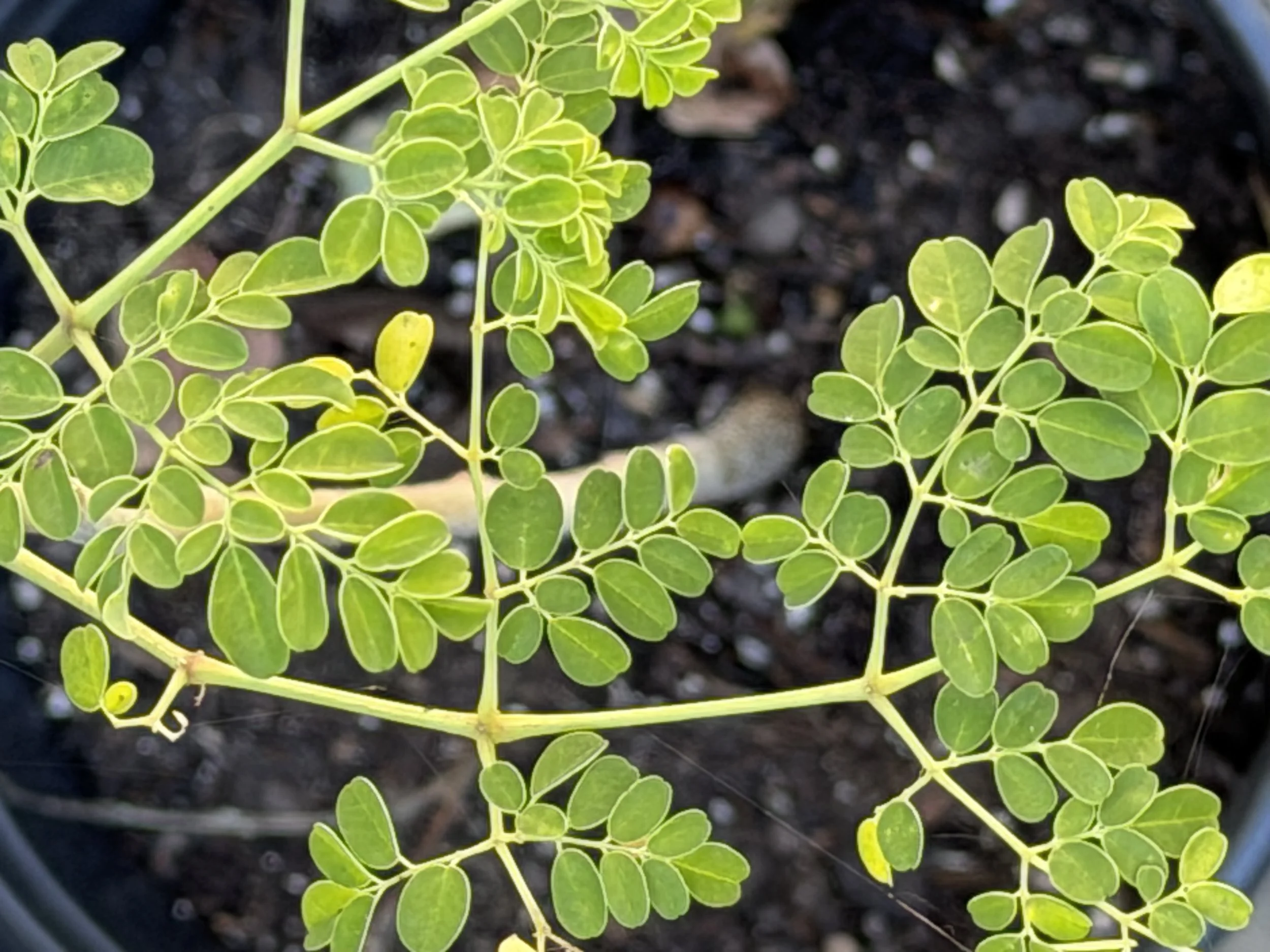
A fast-growing tropical tree native to the sub-Himalayan tracts of India. Known in Hindi as saijhan, in Tamil as murungai, and in Ayurvedic tradition as shigru — one of the plants Ayurveda has recommended continuously for more than four thousand years. The feather-like leaves are among the most nutritionally dense in the plant world: rich in protein, vitamins A and C, calcium, iron, and potassium.
Across India, East Africa, and Southeast Asia, moringa has been a staple food plant for centuries — leaves added to soups, dals, and curries; the long seed pods (the “drumsticks”) cooked whole; the seeds pressed for oil.
In Georgia, moringa grows beautifully as an annual outdoor tree or as a container plant brought indoors through winter. It’s a fast grower — a small start today can reach four to six feet by the end of its first warm season.
What you’re getting:
Rooted and established, grown from seed on the farm
Roots wrapped in moist sphagnum, sealed in a small plastic bag for safe travel
Pot into a 6+ inch container (10-gallon for a long-term home) with well-draining soil once it arrives
Growing conditions:
Light: full sun — 6+ hours of direct light daily
Water: moderate; let soil dry between waterings. Drought-tolerant once established
Hardiness: Zone 9–11 (grown as annual or container plant in Georgia; bring indoors before first frost)
Mature size, first year: 4–6 feet. Mature outdoor tree in native zone: 10–30 feet
Soil: well-drained, prefers sandy loam
A note on placement:
Moringa needs heat and sun. Choose a south-facing spot outdoors or a sunny window indoors. In containers, go with at least a 10-gallon pot to allow for its fast taproot growth. In Georgia, bring indoors before the first frost — the tree will drop leaves in winter and leaf out again in spring.
A note on use:
The young leaves are the most commonly eaten part — rinse, strip from the stems, and add to soups, dals, curries, scrambled eggs, or stir-fries. The flavor is slightly peppery, like a mild watercress. Dried and powdered leaves have a long tradition in cooking and are often added to smoothies and tea. The outer coating of mature seeds is bitter and typically removed before eating. Consume moderately as part of a varied diet.
Shipping:
Ships nationwide via USPS Priority Mail (1–3 days). Best to ship during warm-weather months (April–October) since moringa is cold-sensitive. Cool-weather shipping available on request with heat packs.