
Every plant deserves
its fifteen minutes of fame.
Get it Live.
Rooted and rising. Plants, fresh flowers, seedlings, roots, and clippings. Seasonal availability. Selections update regularly.
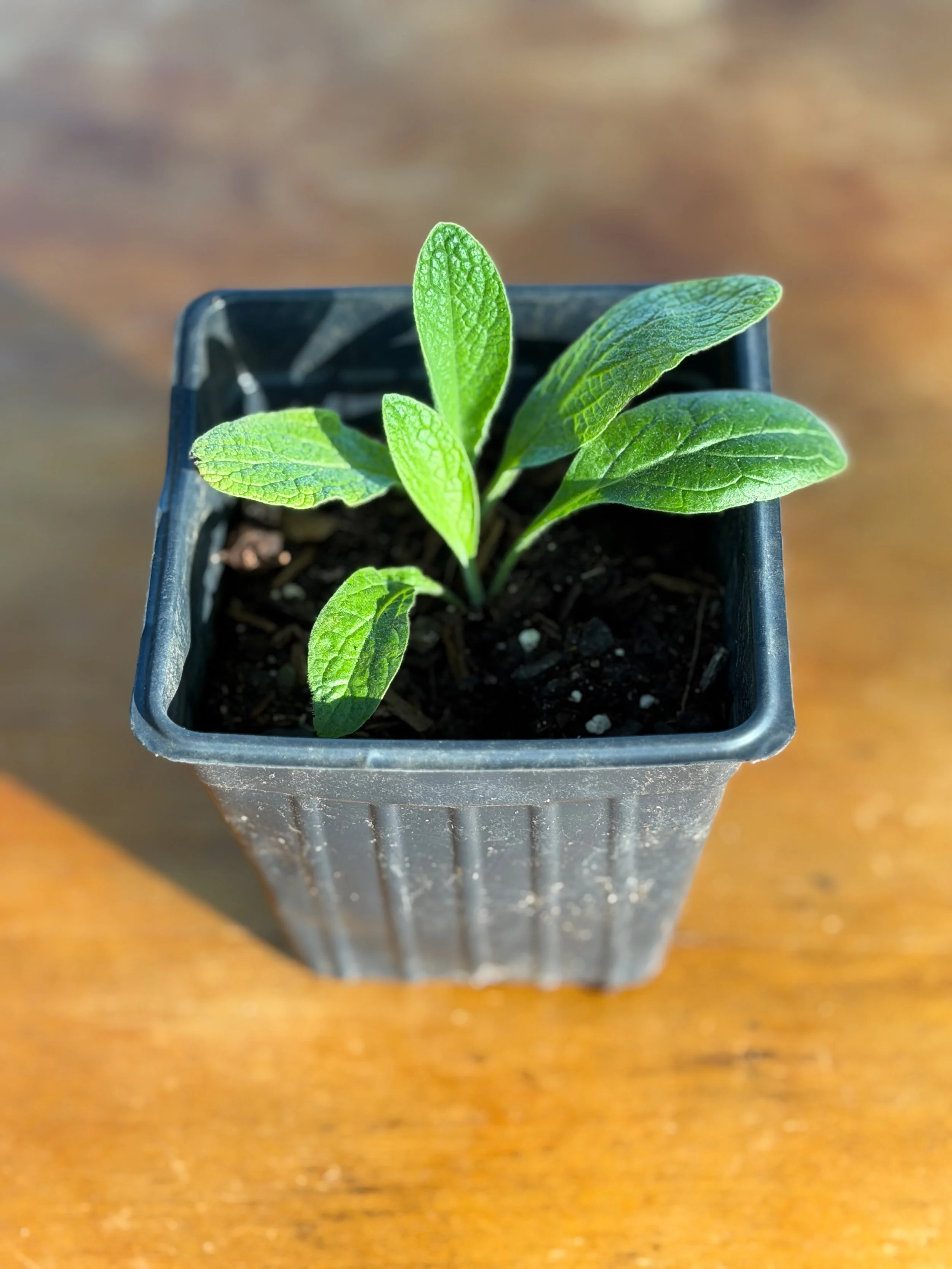
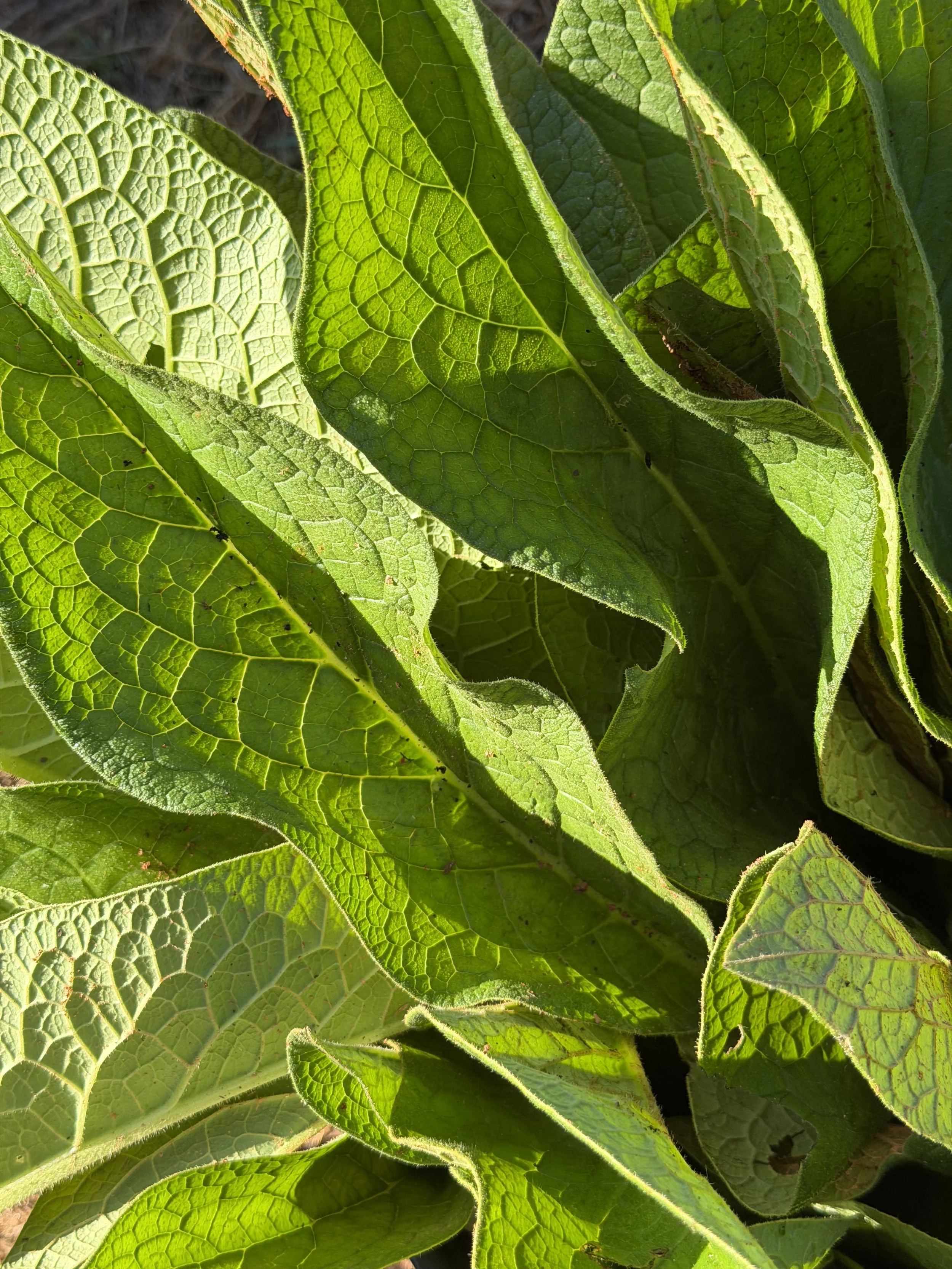
Symphytum officinale · knitbone, bruisewort
A hardy perennial with velvet leaves and purple-pink bell flowers. The genus name comes from the Greek symphyein — “to grow together” — a reference to the plant’s long reputation in home apothecary traditions for topical use on bruises, sprains, and slow-healing skin. Modern research identifies the active compound as allantoin, which the FDA classifies as a skin protectant.
One of the most useful plants to have along a fence line, in a dedicated herb bed, or at the edge of the garden where its deep rhizomes can settle in and come back year after year.
What you’re getting:
Rooted start, 3–5 inches tall
Roots wrapped in moist sphagnum, sealed in a small plastic bag for safe travel
Plant directly into garden soil or a 6+ inch container once it arrives
Growing conditions:
Light: full sun to partial shade (afternoon shade preferred in hot climates)
Water: moderate; prefers consistently moist, well-drained soil
Hardiness: Zone 3–9 (perennial in Georgia; dies back in winter, returns each spring)
Mature size: 2–4 feet tall and wide
Spacing: 24–36 inches apart — comfrey spreads via rhizomes and does best in a permanent spot
A note on placement:
Comfrey has deep taproots and spreads once established. Choose its spot carefully — it’s happiest where you don’t mind it coming back year after year. Many gardeners plant it along a fence line or in a dedicated herb bed.A note on use:
Comfrey is a topical plant. The traditional uses — poultices, salves, infused oils — are external. Internal use (teas, tinctures) is not recommended due to pyrrolizidine alkaloids that can affect the liver with sustained ingestion. External use on intact skin has a long tradition of safety.Shipping:
Ships nationwide via USPS Priority Mail (1–3 days). Best to ship during cool-weather months (October–May) to minimize transit stress. Summer shipping available on request.
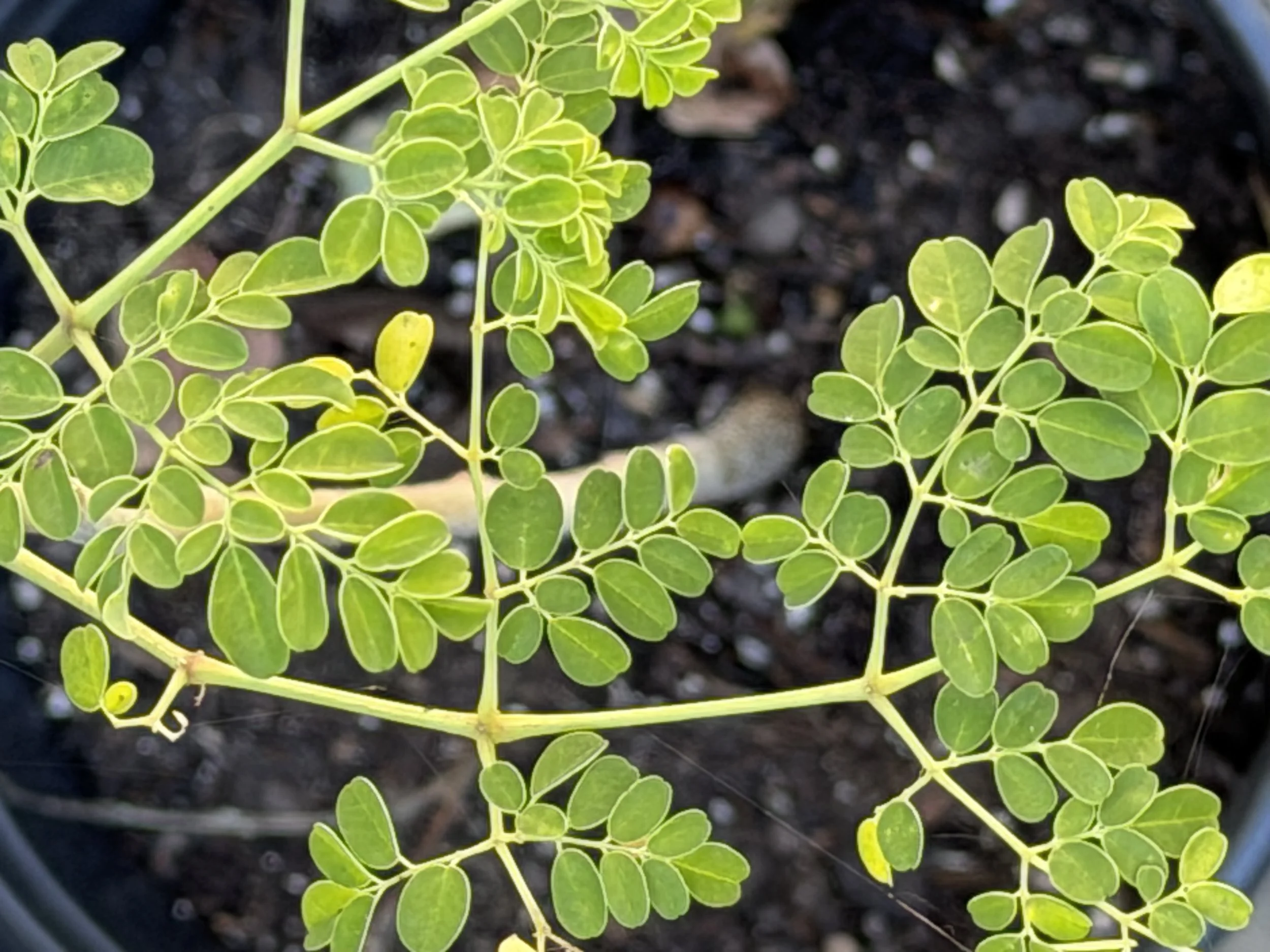
Moringa oleifera · drumstick tree
A fast-growing tropical tree native to the sub-Himalayan tracts of India. Known in Hindi as saijhan, in Tamil as murungai, and in Ayurvedic tradition as shigru — one of the plants Ayurveda has recommended continuously for more than four thousand years. The feather-like leaves are among the most nutritionally dense in the plant world: rich in protein, vitamins A and C, calcium, iron, and potassium.
Across India, East Africa, and Southeast Asia, moringa has been a staple food plant for centuries — leaves added to soups, dals, and curries; the long seed pods (the “drumsticks”) cooked whole; the seeds pressed for oil.
In Georgia, moringa grows beautifully as an annual outdoor tree or as a container plant brought indoors through winter. It’s a fast grower — a small start today can reach four to six feet by the end of its first warm season.
What you’re getting:
Rooted and established, grown from seed on the farm
Roots wrapped in moist sphagnum, sealed in a small plastic bag for safe travel
Pot into a 6+ inch container (10-gallon for a long-term home) with well-draining soil once it arrives
Growing conditions:
Light: full sun — 6+ hours of direct light daily
Water: moderate; let soil dry between waterings. Drought-tolerant once established
Hardiness: Zone 9–11 (grown as annual or container plant in Georgia; bring indoors before first frost)
Mature size, first year: 4–6 feet. Mature outdoor tree in native zone: 10–30 feet
Soil: well-drained, prefers sandy loam
A note on placement:
Moringa needs heat and sun. Choose a south-facing spot outdoors or a sunny window indoors. In containers, go with at least a 10-gallon pot to allow for its fast taproot growth. In Georgia, bring indoors before the first frost — the tree will drop leaves in winter and leaf out again in spring.
A note on use:
The young leaves are the most commonly eaten part — rinse, strip from the stems, and add to soups, dals, curries, scrambled eggs, or stir-fries. The flavor is slightly peppery, like a mild watercress. Dried and powdered leaves have a long tradition in cooking and are often added to smoothies and tea. The outer coating of mature seeds is bitter and typically removed before eating. Consume moderately as part of a varied diet.
Shipping:
Ships nationwide via USPS Priority Mail (1–3 days). Best to ship during warm-weather months (April–October) since moringa is cold-sensitive. Cool-weather shipping available on request with heat packs.
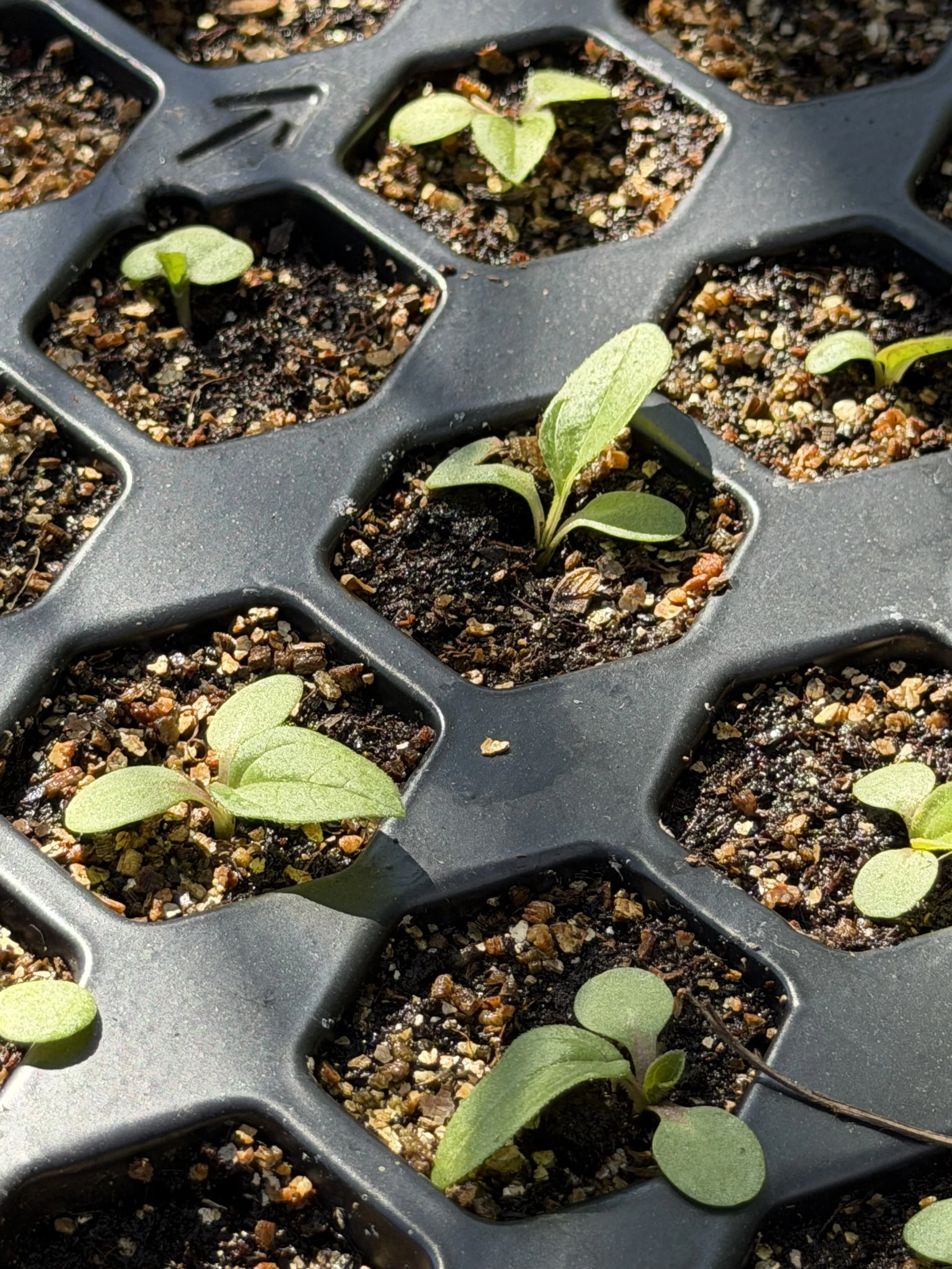
Echinacea purpurea · purple coneflower
A native perennial with a long and well-documented reputation in North American herbal medicine. Cherokee practice recorded the root as a preparation for wounds, snake bites, and sore throats. Nineteenth-century Eclectic physicians formally entered it into their pharmacopoeia for respiratory conditions. Modern clinical research continues to study its effects on upper respiratory infections, with mixed but ongoing results.
Beyond its reputation, echinacea is one of the finest pollinator plants a Georgia garden can hold — tall purple-pink daisies that bloom from midsummer through fall, drawing bees, butterflies, and (in winter, if you leave the dried seed heads standing) goldfinches.
What you’re getting:
Rooted and established seedling, grown from seed on the farm
Roots wrapped in moist sphagnum, sealed in a small plastic bag for safe travel
Plant directly into garden soil or a 6+ inch container once it arrives
Growing conditions:
Light: full sun — 6+ hours of direct light daily
Water: moderate; drought-tolerant once established
Hardiness: Zone 3–8 (fully perennial in Georgia; returns year after year)
Mature size: 2–3 feet tall, 18 inches wide
Bloom time: midsummer through early fall
Attracts: bees, bumblebees, butterflies, and goldfinches (which feed on the seed heads in winter if you leave them standing)
A note on patience:
Echinacea planted this year typically produces modest blooms the first season and reaches full bloom in year two. The wait is worth it — once established, this plant returns for a decade or more and spreads gently through self-sowing.
A note on use:
The root has been documented in topical and internal herbal preparations for centuries. Research on dosage and effect is ongoing. For gardeners, the plant’s greatest contribution is often above ground — as a magnet for native pollinators and a bright presence in the late-summer garden.
Shipping:
Ships nationwide via USPS Priority Mail (1–3 days). Best to ship during cool-weather months (October–May) to minimize stress. Summer shipping available on request.
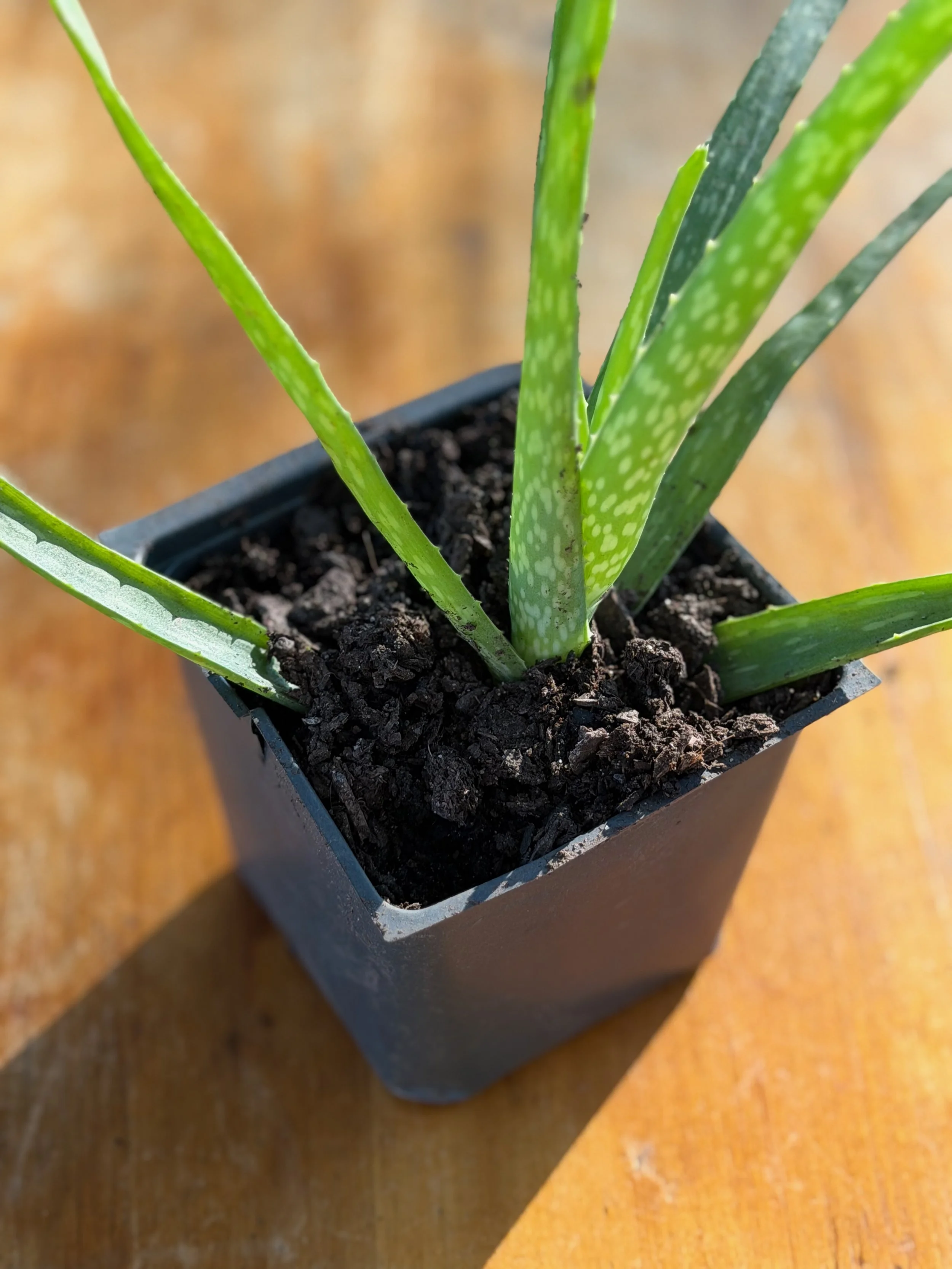
Aloe barbadensis miller
The plant kept on kitchen windowsills for thousands of years — for the gel inside the leaves, which people have reached for after minor burns, scrapes, and sunburn since the time of ancient Egypt. Dioscorides described it in the first-century De Materia Medica. It has been continuously cultivated in home gardens and kitchens ever since.
Easy to grow, nearly impossible to kill, and happy to live its whole life in a small pot by a sunny window.
What you’re getting:
A rooted and established plant, 4–6 inches tall, grown on the farm
Roots wrapped in moist sphagnum, sealed in a small plastic bag for safe travel
Pot into any 3–5 inch container with cactus/succulent mix once it arrives
Growing conditions:
Light: bright indirect to 4+ hours direct sun
Water: let soil dry fully between waterings — overwatering is the single most common way to kill an aloe
Hardiness: Zone 9–11 (perennial outdoors in these zones)
In colder zones (3–8): grow in a container as a houseplant year-round, or move outdoors during warm months and back inside before the first frost
Mature size: 1–2 feet tall and wide
Soil: cactus/succulent mix, or regular potting soil amended with perlite and sand
A note on placement:
Aloe is happiest in the sunniest spot you have — a south-facing kitchen window, a bright bathroom, or outdoors on a porch during warm months. It can tolerate lower light but will stretch and get leggy. Keep it near a window where it gets at least a few hours of direct sun each day.
A note on use:
The clear gel inside a mature leaf has a long tradition of topical use on minor burns, scrapes, and sunburn. Cut a leaf, split it open, and apply the gel directly. The outer skin of the leaf and its yellow latex are irritating — scrape only the clear interior gel.
Shipping:
Ships nationwide via USPS Priority Mail (1–3 days). Aloe handles shipping well in most conditions. During cold-weather months, we add a heat pack if temperatures at your destination are forecast below 40°F.
Old Remedies. New Rituals.
Grown, gathered, and crafted with pure ingredients. Never any fillers. Made for everyday care.
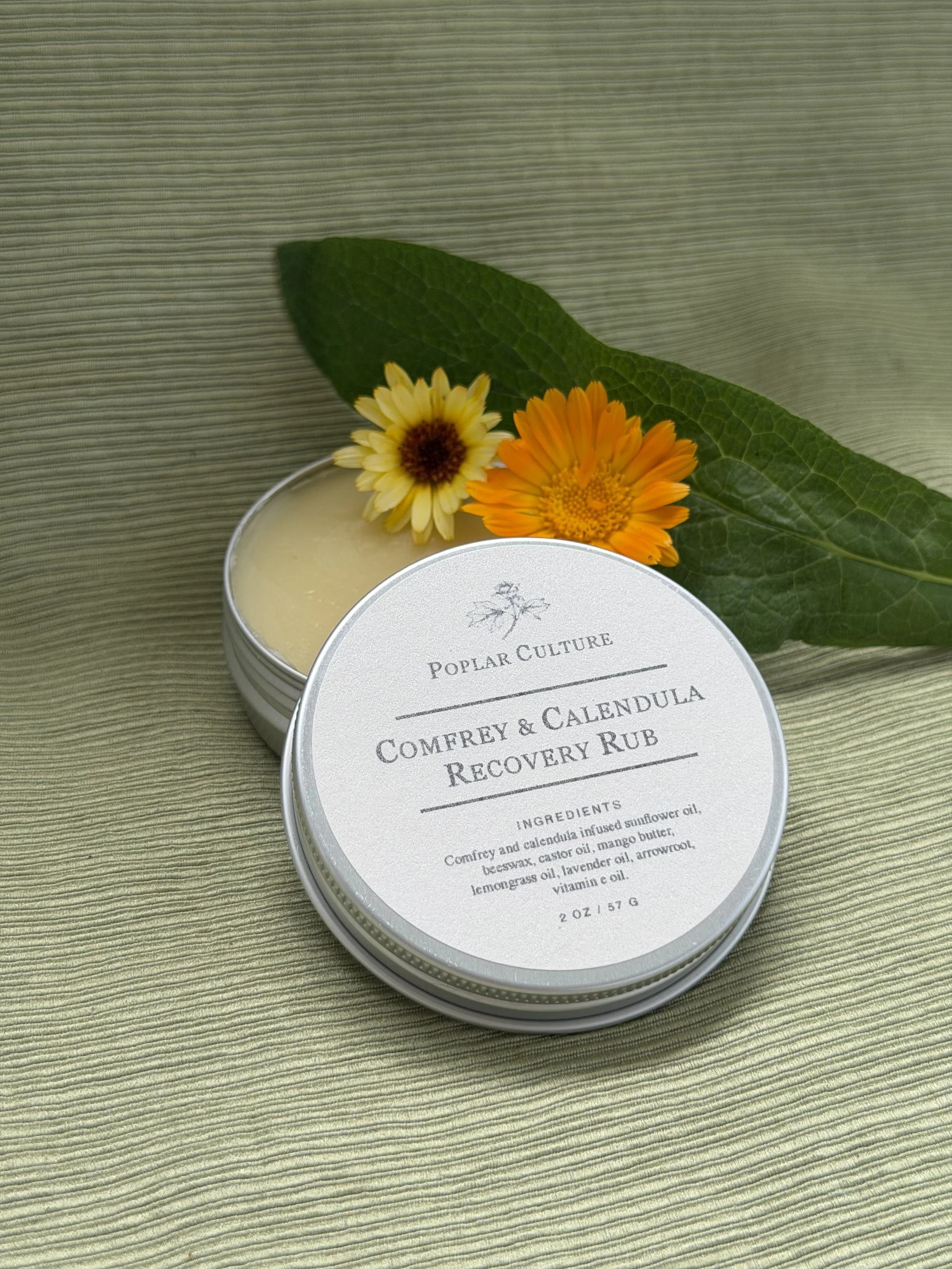
The oldest kind of healing — plants, oil, wax, time. We infuse whole comfrey leaves and calendula petals into sunflower oil for six weeks, then melt and blend mango butter and beeswax. It’s as simple as can be and yet the power contained in this tin will leave you amazed.
Comfrey has been called "knitbone" and for a thousand years, and has been used to speed the mending of bruises, strained muscles, and broken bones. Comfrey contains allantoin — an FDA-recognized skin protectant known for its role in skin conditioning and cell turnover. Calendula softens the skins while delivering the comfrey to the deeper levels for restoration.
Made by hand in small batches on our farm in Georgia. Meant to last. Made to last.
Ingredients: Comfrey and calendula infused sunflower oil, beeswax, castor oil, mango butter, lemongrass oil, lavender oil, arrowroot, vitamin E oil.
How to Use: Warm a small amount between your fingers and rub into sore muscles, aching joints, on sprains and bruises. Best applied after a warm bath or shower. Not for use internally, on open wounds or broken skin.
Cautions: For external use only. Discontinue if irritation occurs.
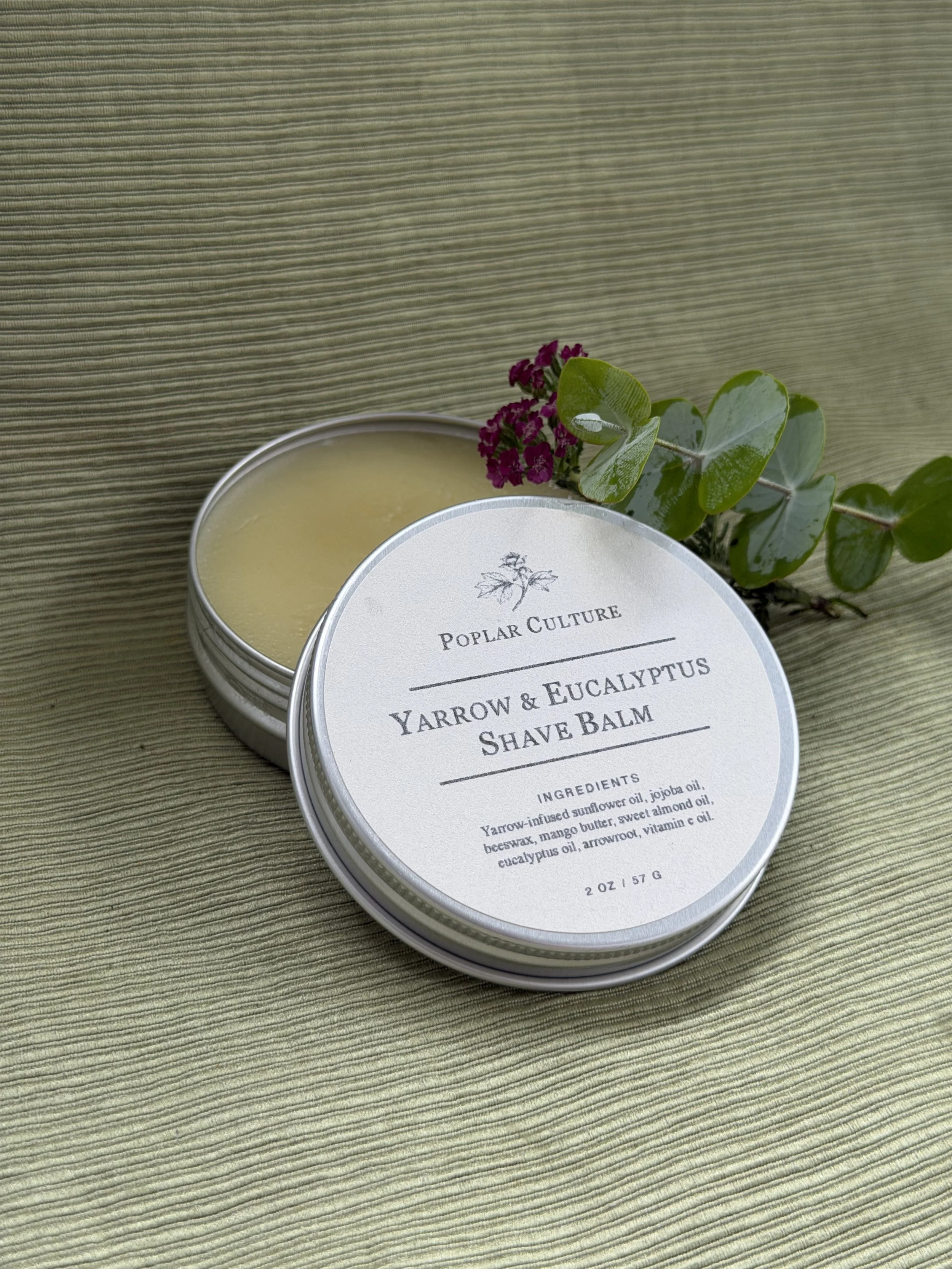
Yarrow is the herb of ancient warriors and quiet gardeners alike — used for millennia to calm the skin and steady the nerve. The yarrow is infused into sunflower oil for six weeks, then combined with jojoba oil, mango butter, and a bright shot of silver-dollar eucalyptus.
This is more than just a shave balm that goes on cool, glides thin, and settles the skin before or after a razor's work. We made it for those emergency shaves and skin repairs, but it’s long been used on battlefields to stop bleeding. It’s endlessly useful including its ability to keep mosquitos away.No fragrance-oil funk. No cheap alcohol. Just plants and a little wax, working in the way nature intended.
Hand crafted in small batches on our farm in Georgia.
Ingredients: Yarrow-infused sunflower oil, jojoba oil, beeswax, mango butter, sweet almond oil, eucalyptus oil, arrowroot, vitamin E oil.
How to Use: After showering or wetting your face, warm a pea-sized amount between your fingers and massage over the area to be shaved. Shave with a sharp blade. Follow with cool water to close the pores. A small amount lasts many shaves.
Cautions: For external use only. Patch-test on inner arm before first use if you have sensitive skin.
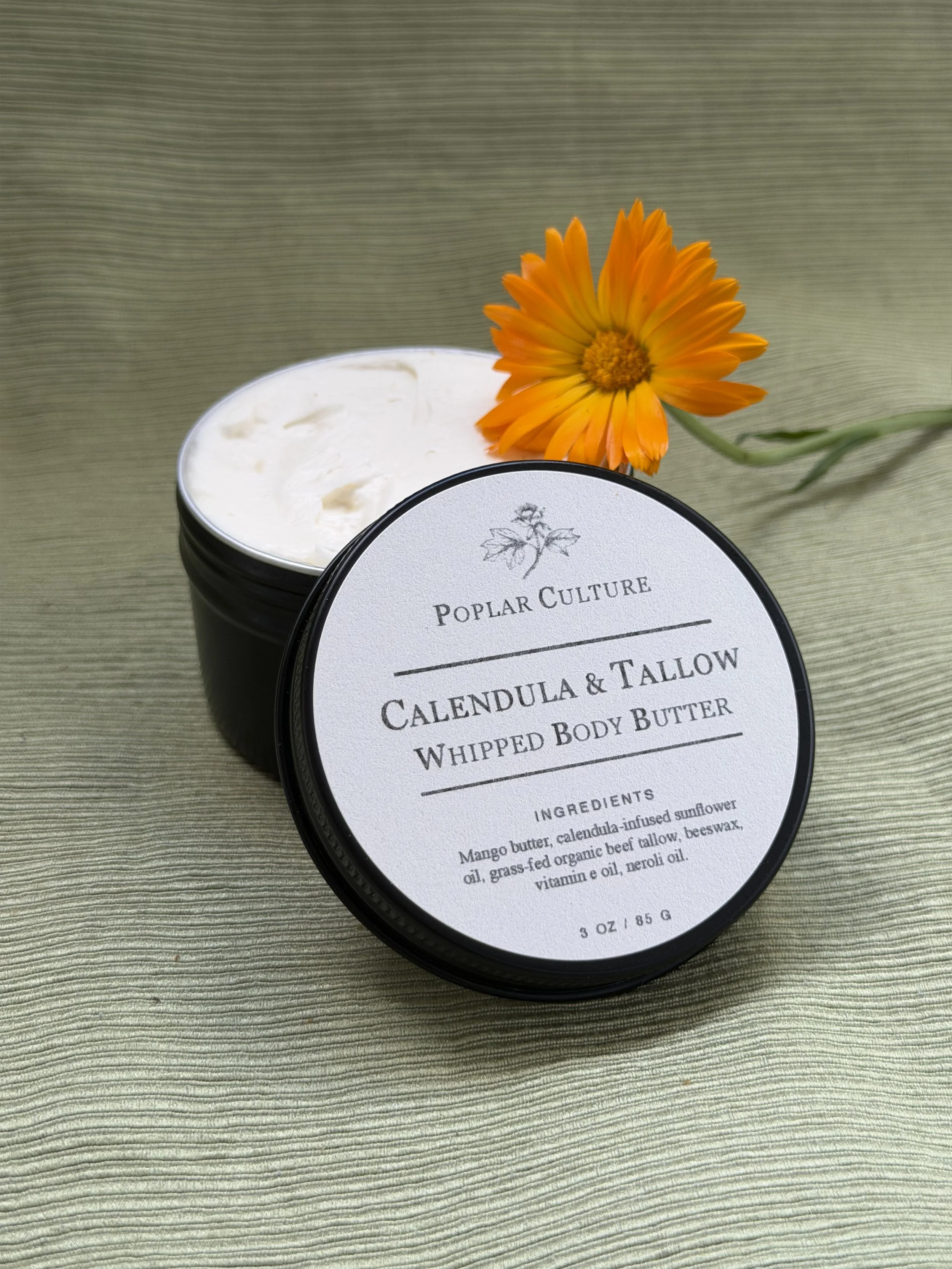
An old-fashioned body butter, made the way it was made a hundred years ago — with grass-fed tallow, mango butter, and calendula petals infused into sunflower oil for weeks. Whipped light until it holds itself together in your palm like fresh cream, then settles into the skin without residue.
Tallow contains the same fats your skin already makes, which is why it absorbs quickly and does its work quietly. Mango butter carries the tallow into softer territory. Calendula, our farm's workhorse plant, brings the calming and healing. Neroli oil scents it lightly — sweet-floral, not perfume.
For dry hands, elbows, feet, shins, and the skin that carries you through the season.
Made by hand in small batches on our farm in Georgia. Not vegan.
Ingredients: Grass fed tallow, mango butter, calendula-infused sunflower oil, beeswax, arrowroot powder, vitamin E oil, neroli oil.
How to Use: Scoop a small amount, warm between your fingers, and massage into skin. A little goes far. Best applied to damp skin right after a shower for maximum absorption. Store in a cool spot away from direct sun.
Cautions: Contains beeswax and tallow — not vegan. For external use only. Patch-test on inner arm before first use.
Let the plants tend to you.
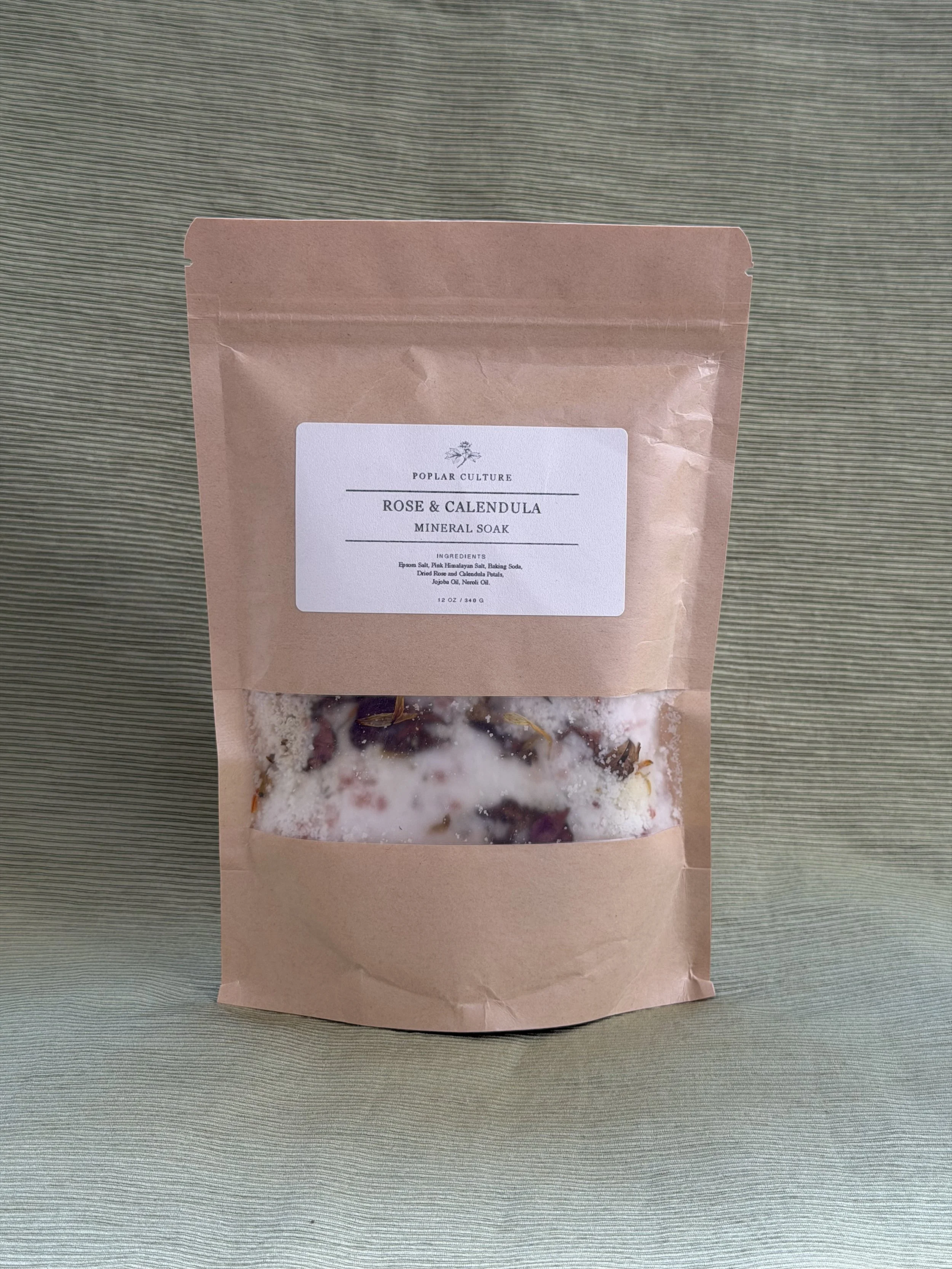
A quiet, luxurious soak for at-home spa restoration. Epsom and pink Himalayan salts draw out tension while baking soda softens the skin. Dried rose and calendula petals float on the surface like a floral crown. Jojoba oil melts as the water warms and a whisper of neroli scents the room.
Rose and calendula are two of the oldest plants used in the bath — rose in Roman baths, calendula in medieval infirmaries. One pouch holds enough for three or four baths. Draw the water warm, not hot. The petals settle on the surface; the salts do the rest. A small muslin bag is included if you'd rather keep the petals contained.
Ingredients: Epsom salt, Pink Himalayan salt, baking soda, dried rose and calendula petals, jojoba oil, neroli oil.
How to Use: Draw a warm bath. Pour in one-third to one-half of the pouch (depending on how mineral-rich you want the water). Swirl to dissolve. Soak 20–30 minutes. Rinse off before drying. Pouch is resealable for future use. Reuseable muslin tea bag included.
Cautions: For external use only. Rinse tub after use to prevent slippery surface. Avoid getting salts in eyes.
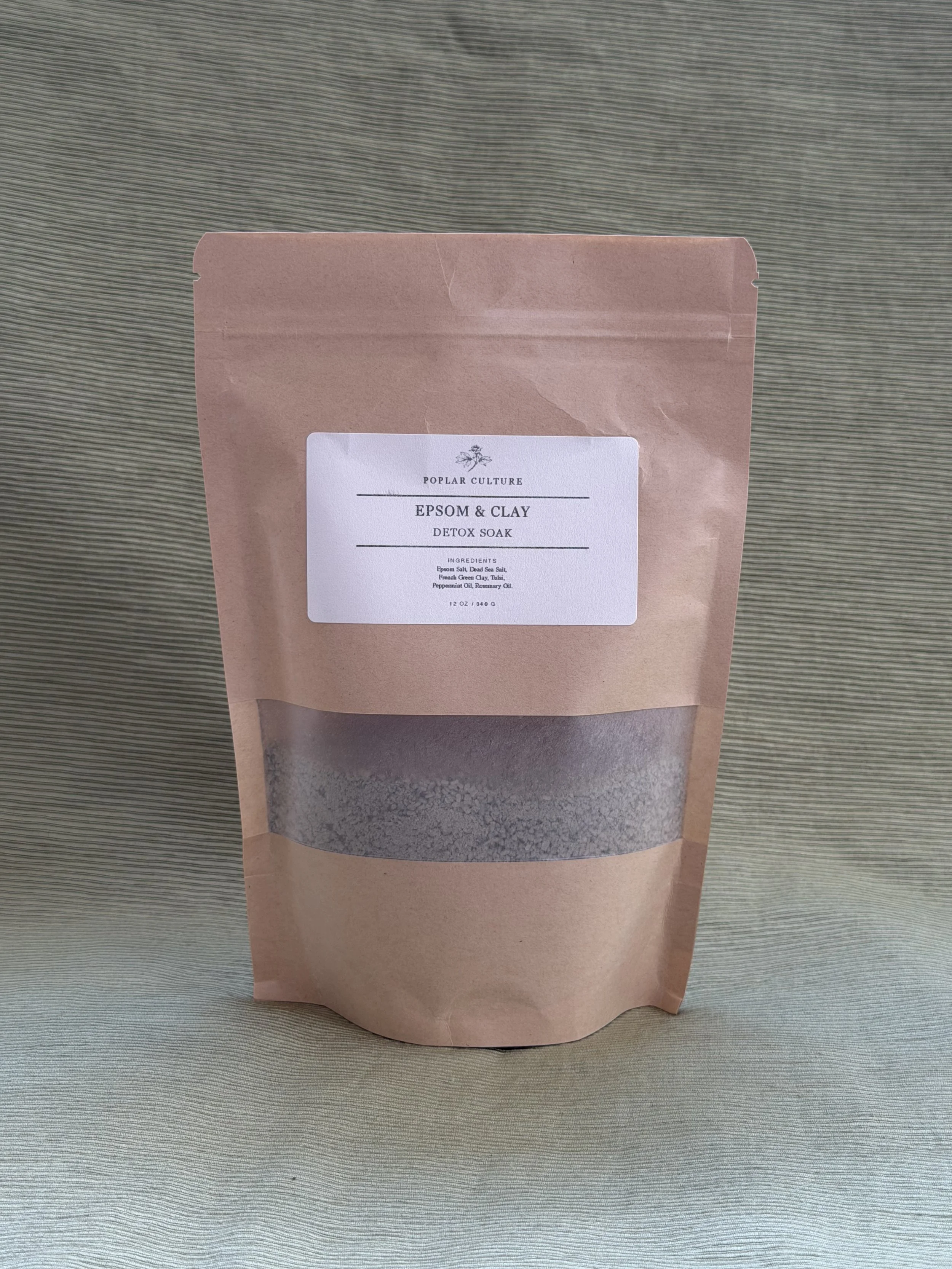
A soak for after a long hike, a heavy meal, or a week that took more than it gave. Epsom and Dead Sea salts pull heaviness out of the muscles. French green clay draws the water into a mineral-rich bath. Tulsi — sacred basil of Ayurvedic tradition — steeps into the water like a tea. Peppermint and rosemary oils sharpen the whole thing into something clarifying.
Not delicate. Not floral. Made for when you need to shake the day off.
Ingredients: Epsom salt, Dead Sea salt, French green clay, tulsi, peppermint oil, rosemary oil.
How to Use: Draw a warm bath. Pour in one-third to one-half of the pouch. Swirl to dissolve. Soak 20–30 minutes. Drink water before and after — mineral soaks are hydrating for the skin but can be dehydrating for the body. Rinse off before drying.
Cautions: For external use only. Avoid if pregnant or nursing (peppermint and rosemary oils). Rinse tub after use.
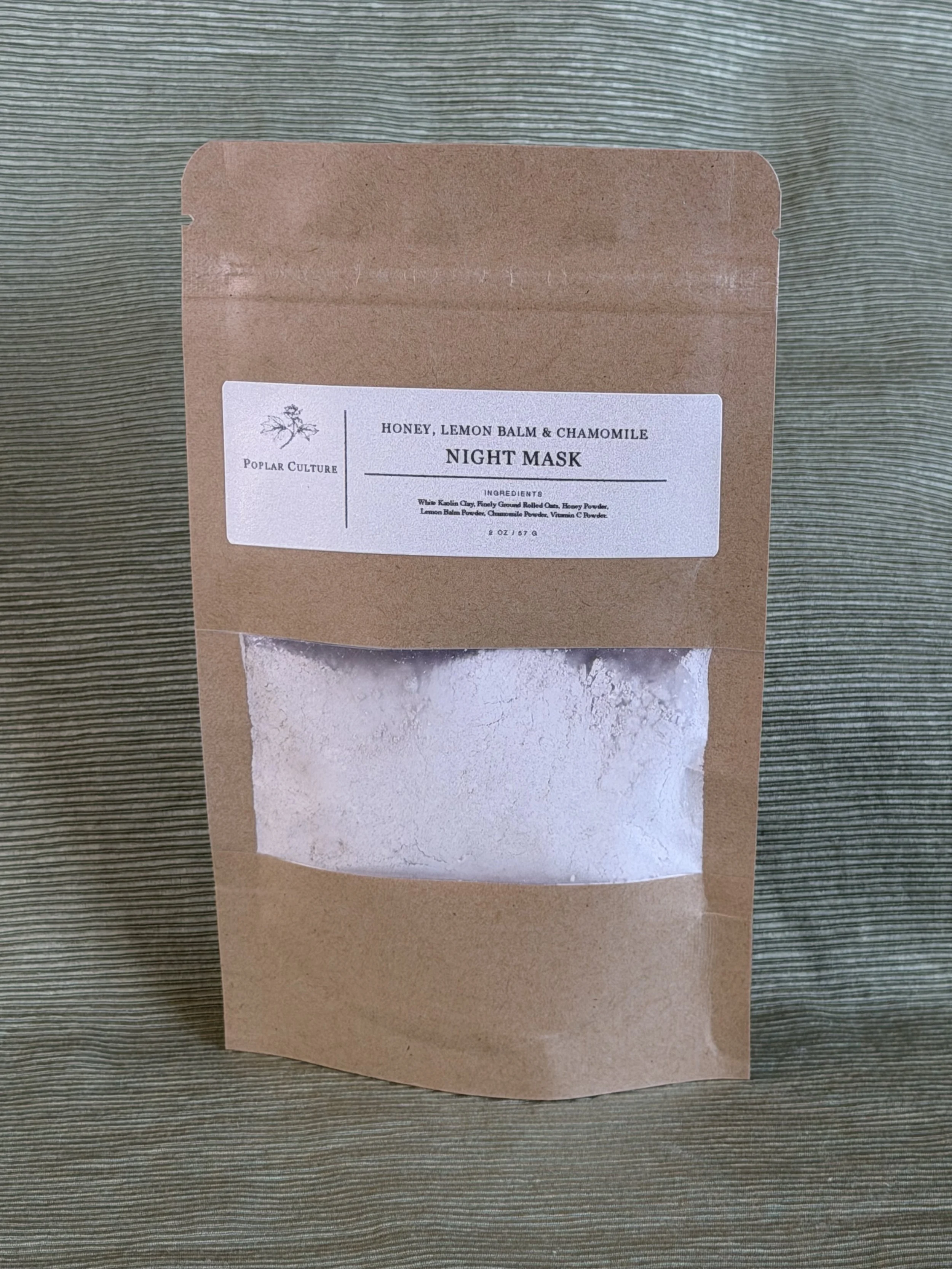
A soft, honey-forward mask built for sensitive and dry skin. White kaolin pulls gently — not aggressively — from the pores. Finely ground oats calm inflammation and soothe. Honey powder feeds the skin's own moisture barrier while lemon balm and chamomile bring their long-documented calming properties.
Meant to be applied in the evening, left on for a short window, and rinsed before bed — a small ritual for the wind-down.
Ingredients:
White kaolin, finely ground rolled oats (Avena sativa), honey powder, chamomile flower powder (Matricaria chamomilla), lemon balm leaf powder (Melissa officinalis).
How to use:
Mix 1 teaspoon of powder with a few drops of warm water — or plain yogurt for a richer feel — to make a smooth paste. Apply to clean skin. Leave on for 10–15 minutes. Rinse thoroughly with warm water and follow with your usual nighttime moisturizer. Two or three times a week.
Cautions:
Contains honey — not vegan. Patch-test on the inner arm before first use.
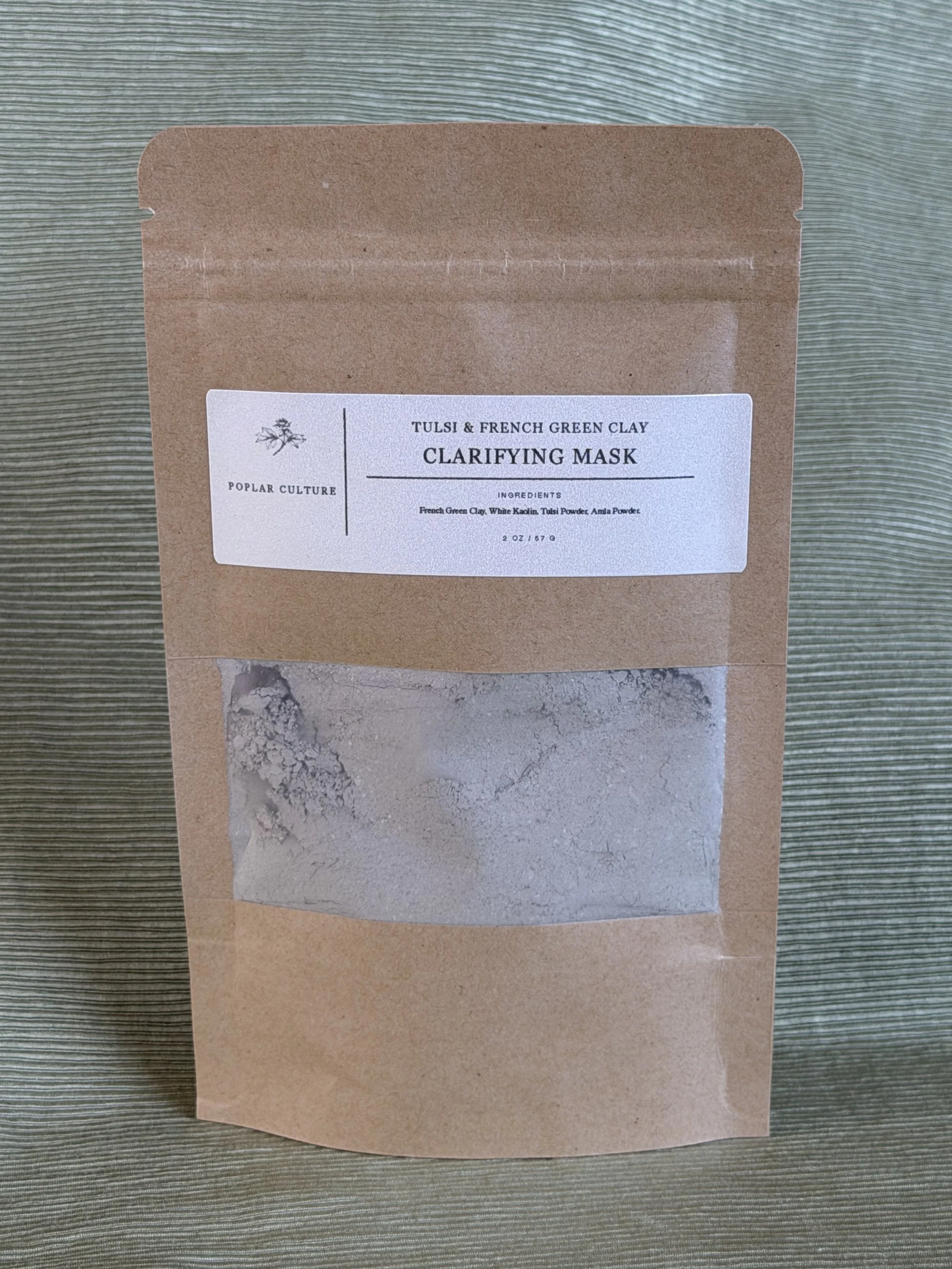
A pull-the-day-out-of-your-face mask made with French green clay, white kaolin, tulsi, and amla. Green clay is famous among aestheticians for its ability to draw impurities from the skin — it's what your skin drinks in after it's been through too much.
Tulsi — sacred basil in Ayurvedic tradition — adds a bright, herbaceous quality and its own well-studied cleansing properties. Amla, the Indian gooseberry, brings vitamin C and a gentle brightening. Made for combination and oily skin. Best used once a week.
Ingredients:
French green clay, white kaolin, tulsi leaf powder (Ocimum sanctum), amla powder (Phyllanthus emblica).
How to use:
Mix 1 teaspoon of powder with a few drops of warm water to make a smooth paste. Apply to clean, damp skin, avoiding the eye area. Leave on for 8–12 minutes. Rinse with warm water and pat dry. Follow with a moisturizer. Once a week for combination or oily skin; every 10–14 days for drier skin.
Cautions:
For external use only. Patch-test on the inner arm before first use. Do not apply over broken skin or an active rosacea flare-up.
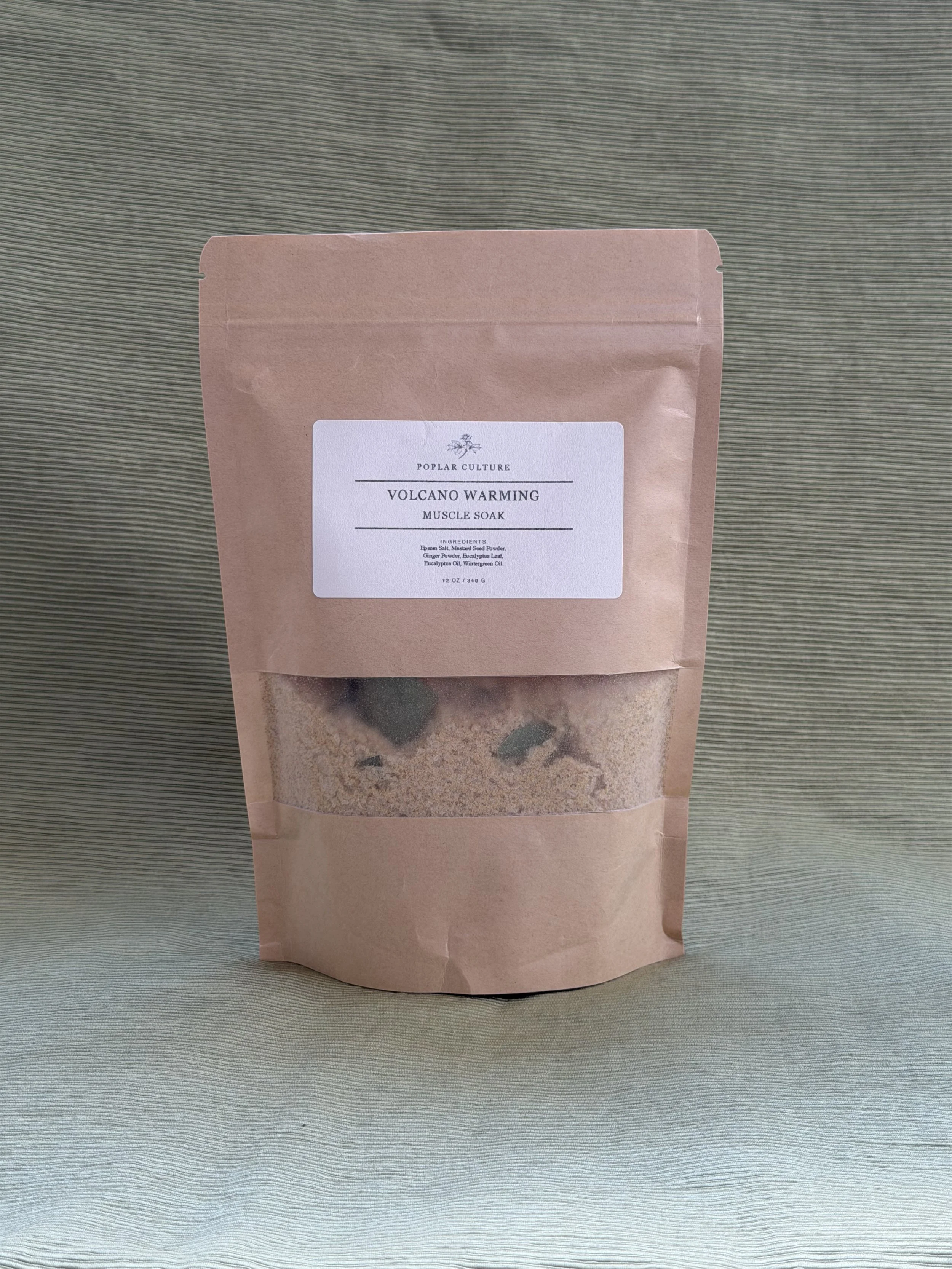
A soak built for the coldest days of winter and the days after hard physical work. Mustard seed powder and ginger warm the water like a mustard plaster. Eucalyptus leaf and eucalyptus oil open the sinuses and steady the breath. Wintergreen oil brings a cool-tingle counterpoint. Epsom salt does the long, slow work of drawing tension out of tired muscles.
For the mornings when you can't quite get warm. For the evenings when everything aches.
Ingredients: Epsom salt, mustard seed powder, ginger powder, eucalyptus leaf, eucalyptus oil, wintergreen oil.
How to Use: Draw a warm bath — this one calls for warmer water than usual to activate the warming spices. Pour in one-third of the pouch. Swirl to dissolve. Soak 20–25 minutes (this soak is more intense than the others — don't push past comfortable). Rinse off before drying.
Cautions: For external use only. Not for pregnant or nursing women. Not for children under 12. Avoid if you have circulatory conditions. Patch-test on inner arm before first full soak. Rinse tub thoroughly after use.
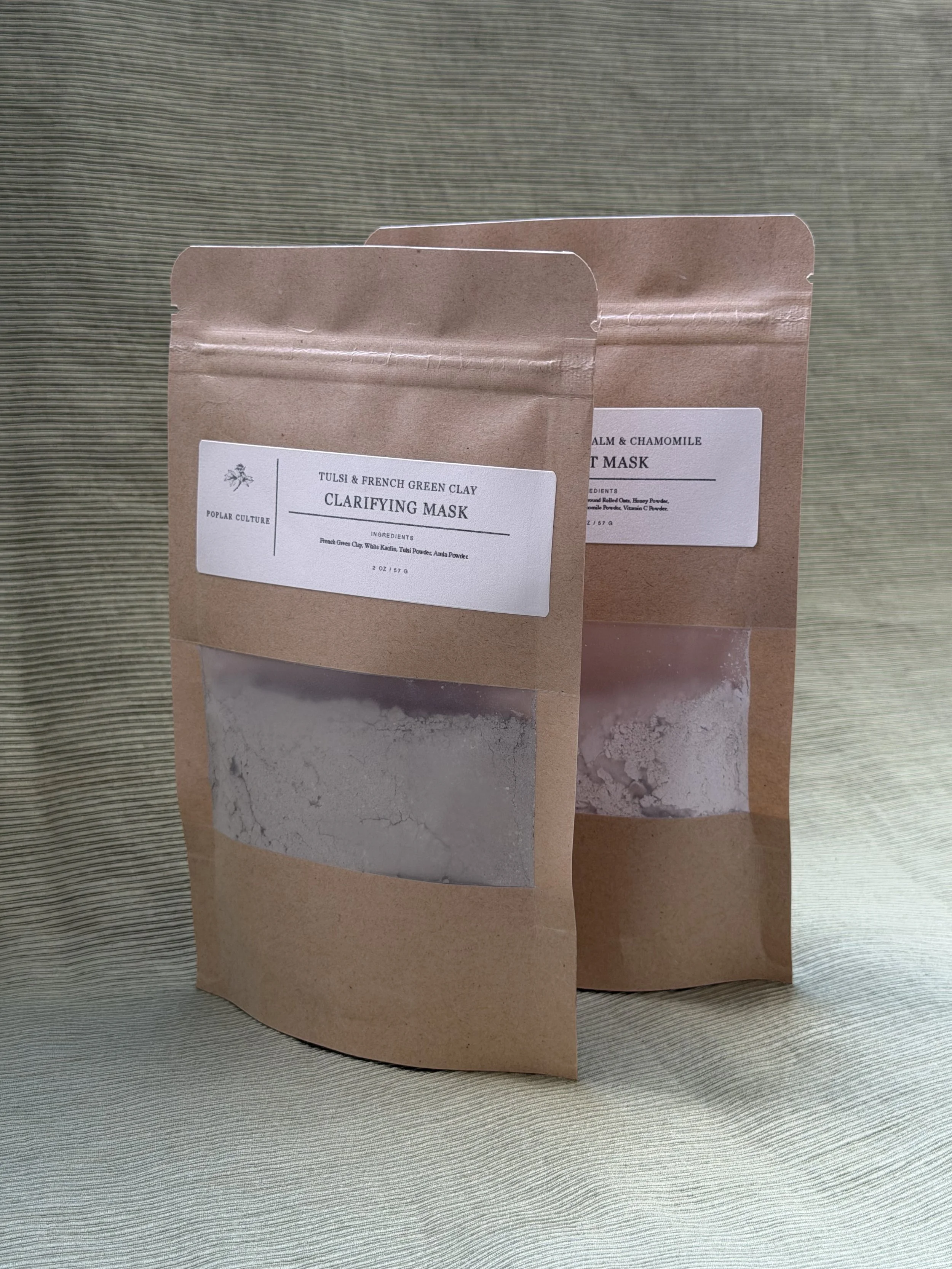
Two masks, two rhythms. One for the clarity of morning, one for the winding down at the end of the day. The morning mask works with tulsi and gentle clay to draw and clarify, a bright, plant-forward reset before the day begins. The evening mask settles with honey, lemon balm, and chamomile, softening, calming, quieting the skin down for sleep.
How to use:
Morning (Tulsi): Apply a thin layer to clean, damp skin. Leave on 8–10 minutes. Rinse with cool water. Follow with body butter or a light oil.
Evening (Honey): Apply a generous layer to clean skin before bed. Leave overnight for full restoration, or rinse after 20 minutes for a shorter treatment.
The Well-Herbed Table.
Digital Download - 20 Herbal mocktails and cocktail recipes built to be printed as 5 × 7 recipe cards. Perfect for any occasion and built from the garden up.
The twenty recipes are built as a mocktail first and offer a cocktail variant.
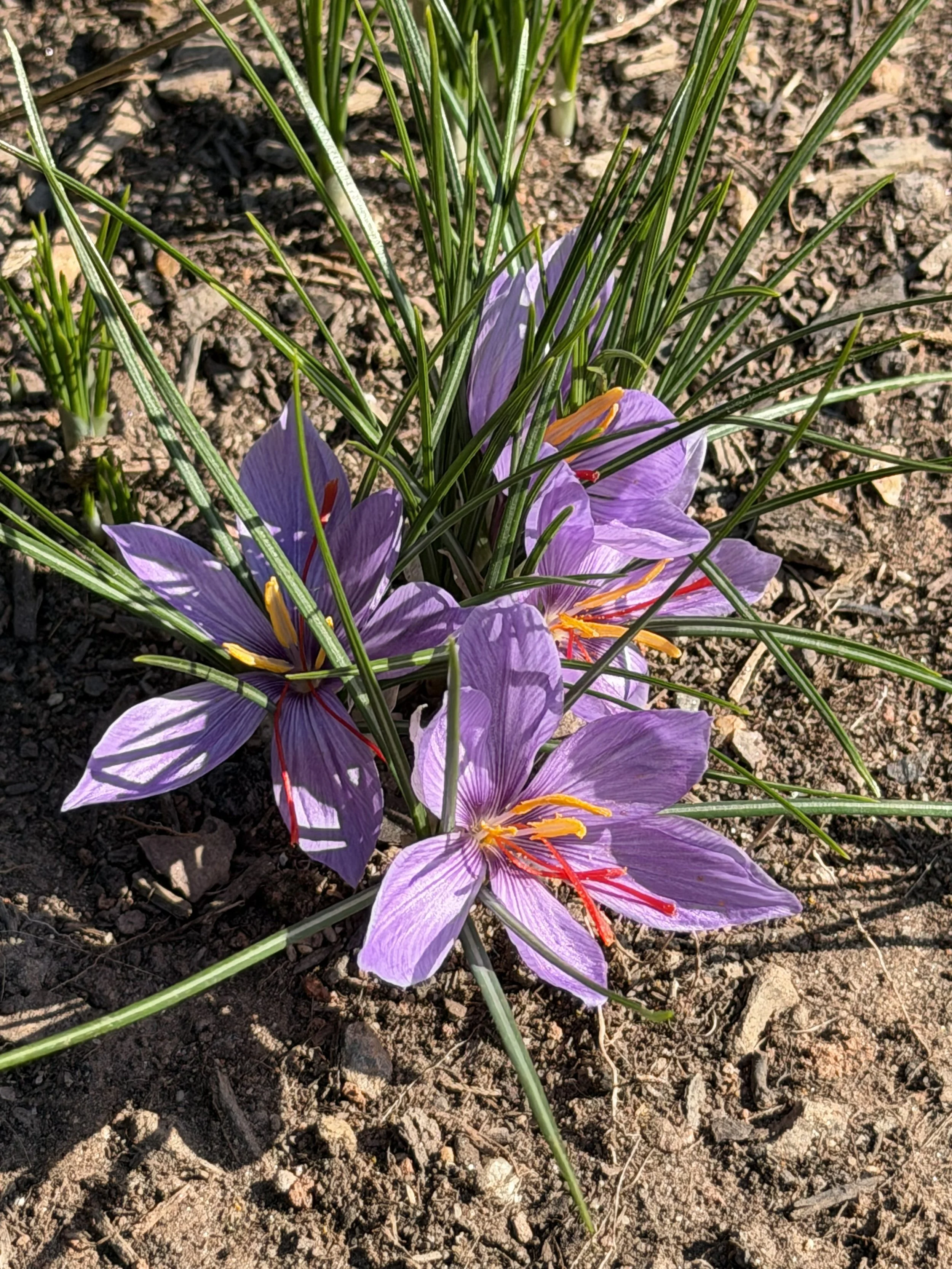
The Farm Series is ten drinks anchored in herbs from the Poplar Culture beds — tulsi, rose, saffron, tarragon, yarrow, calendula, hibiscus.
The Home Bar Duo is ten drinks built from herbs and produce you'll find at any farmers market — basil, mint, thyme, rosemary, chamomile.
Every card carries a lesson on the reverse — how to make the syrup, what the herb does, why it matters. So you leave with a recipe and something you understand and can share.
—
What you get
A 45-page printable PDF, delivered instantly by email after purchase. Twenty full recipe cards, front and back for each. Formatted 5 × 7 inches — read it on any device, or print it at home on cardstock if you want a physical deck for the bar.
—
Delivery
Digital download. Link sent to your email at checkout and available anytime in your account. No physical item ships.
—
Terms
For personal use. Please don't redistribute, resell, or reprint the file for commercial use. If you'd like to gift it, buy another copy — it's what keeps small studios small.
“Good food is very often, even most often, simple food.”

For the love of the wild.




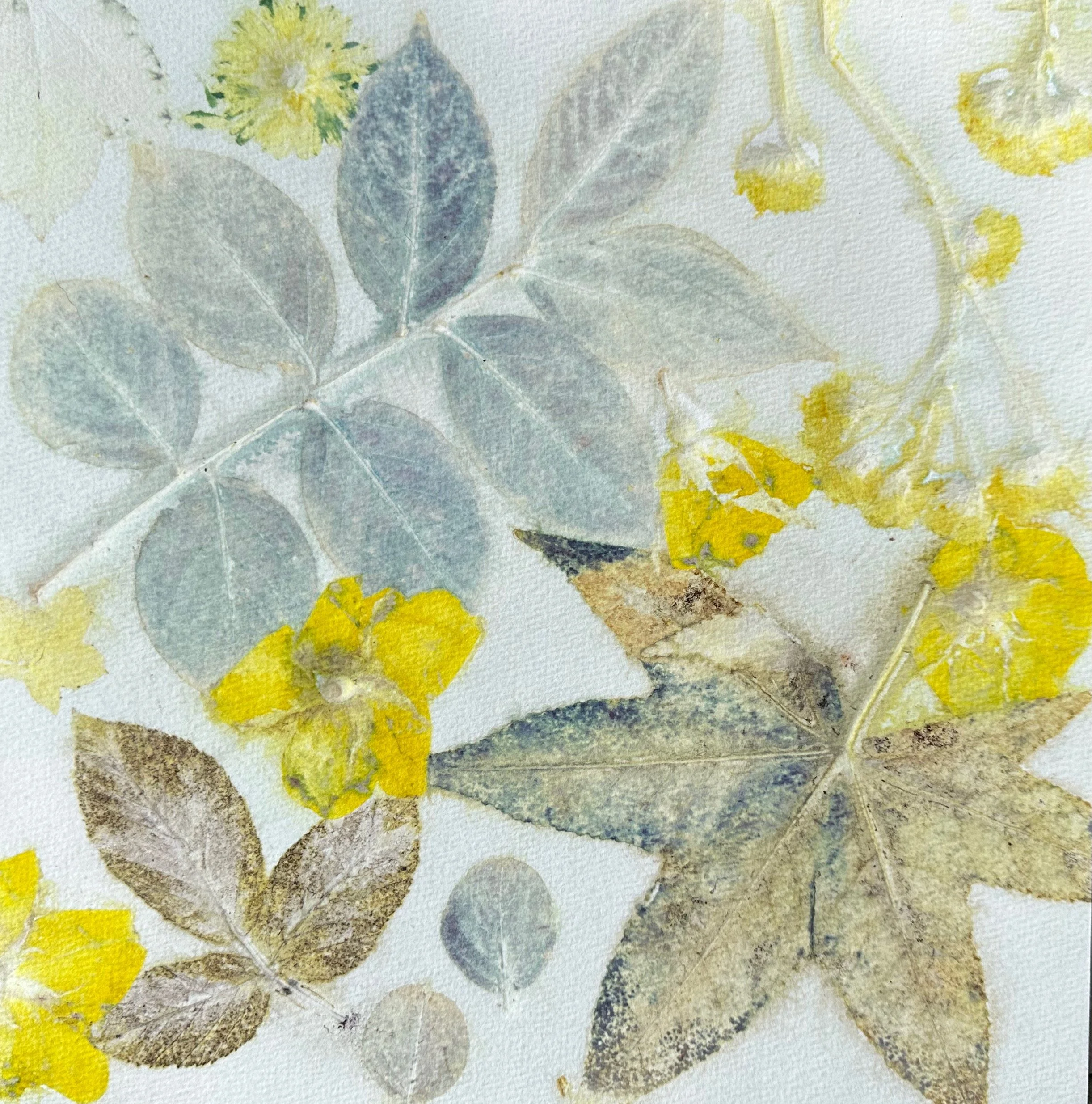
The plant signs its own work.
Framed ecoprints and cyanotypes made from plants grown and foraged on the farm.
Baskets & Bundles
Three baskets for the giving kind.
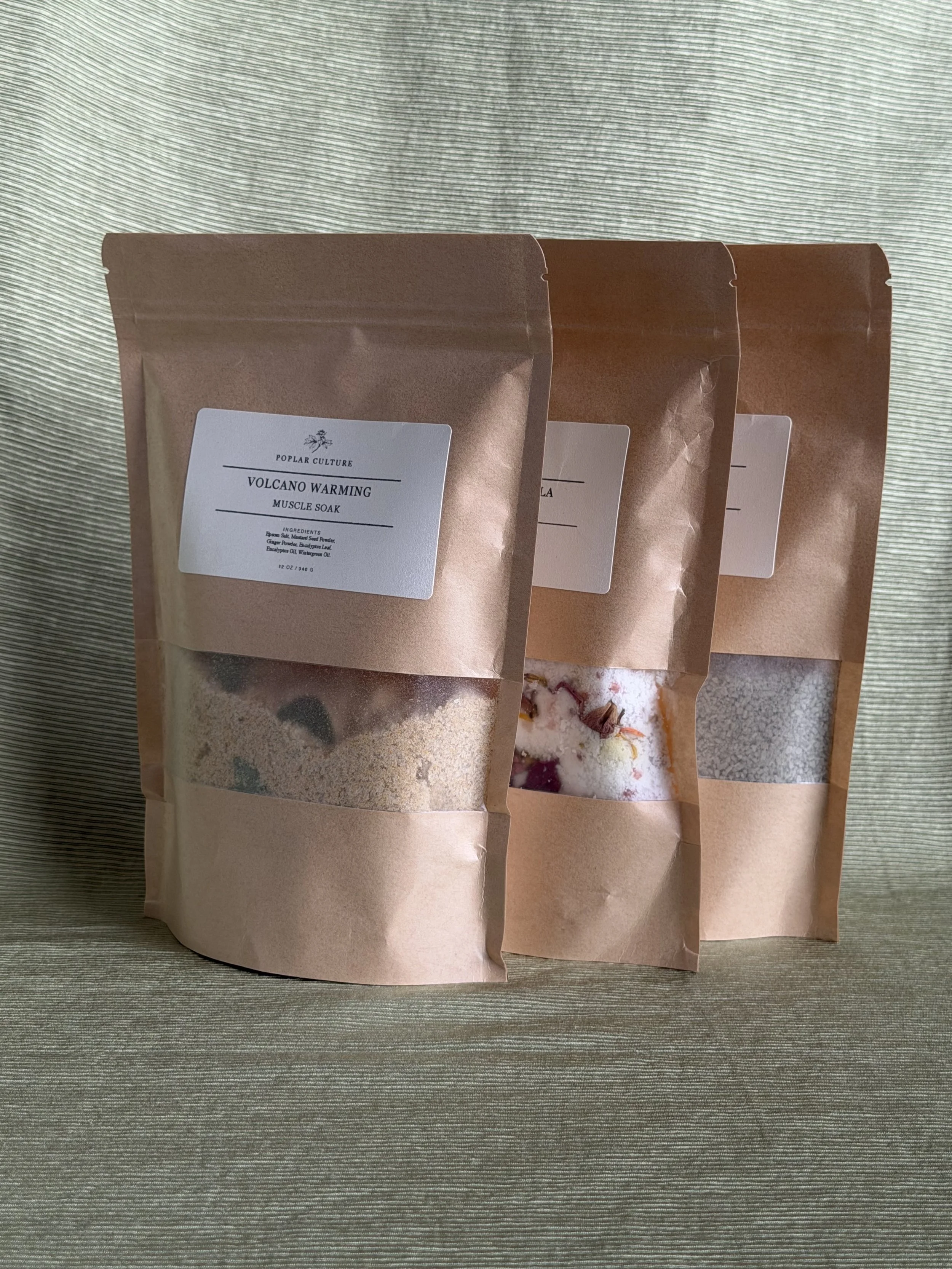
An evening bath, a morning face — the whole arc of a slow day, in one basket.
Includes:
Rose & Calendula Mineral Soak · 8 oz
Calendula & Tallow Whipped Body Butter · 3 oz
Day & Night Face Mask Duo
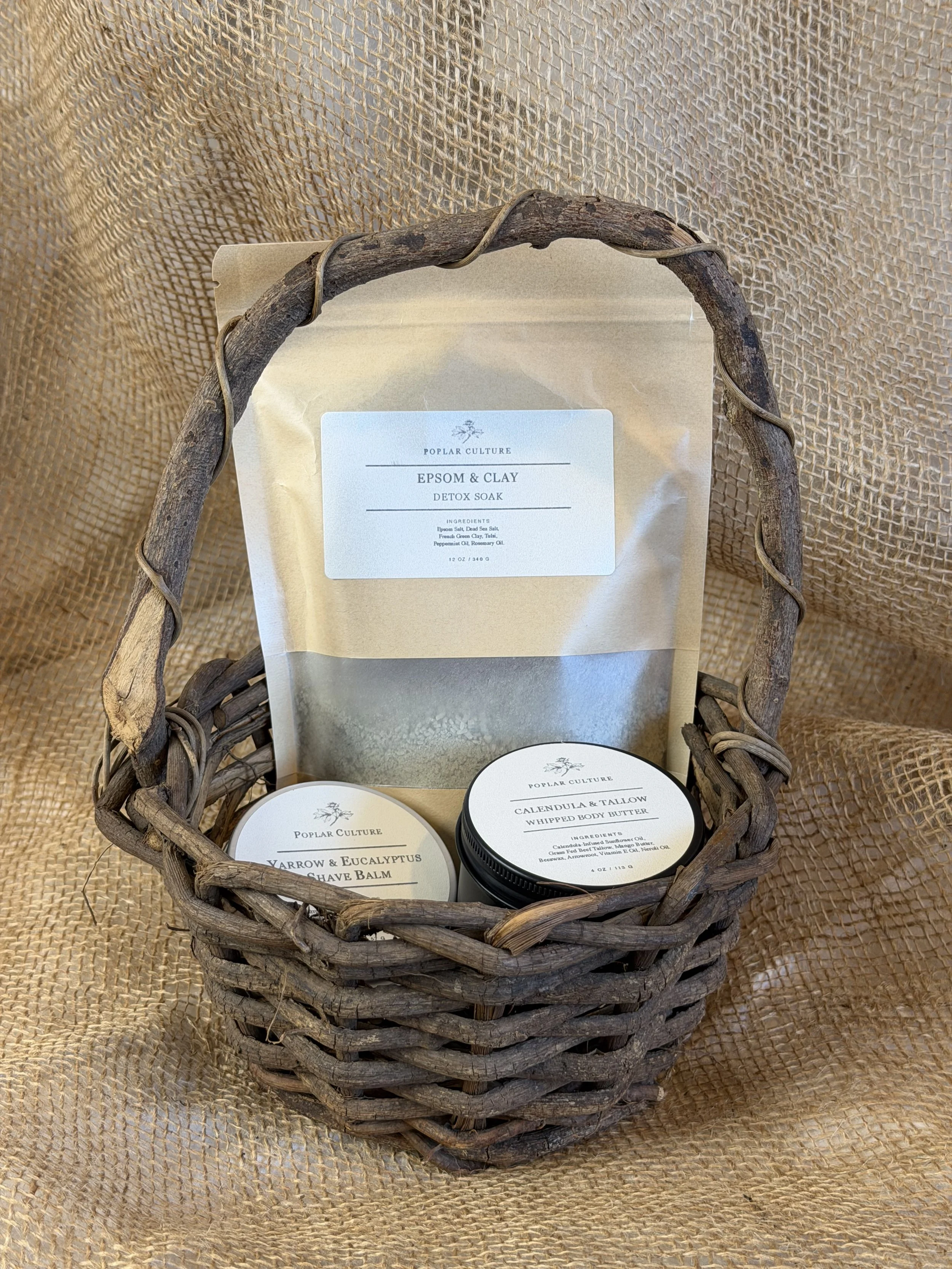
For bodies that work or work out and for skin that appreciates good care.
Includes:
Comfrey & Calendula Recovery Rub · 2 oz
Epsom Clay Detox Soak · 8 oz
Yarrow & Eucalyptus Shave Balm · 2 oz